

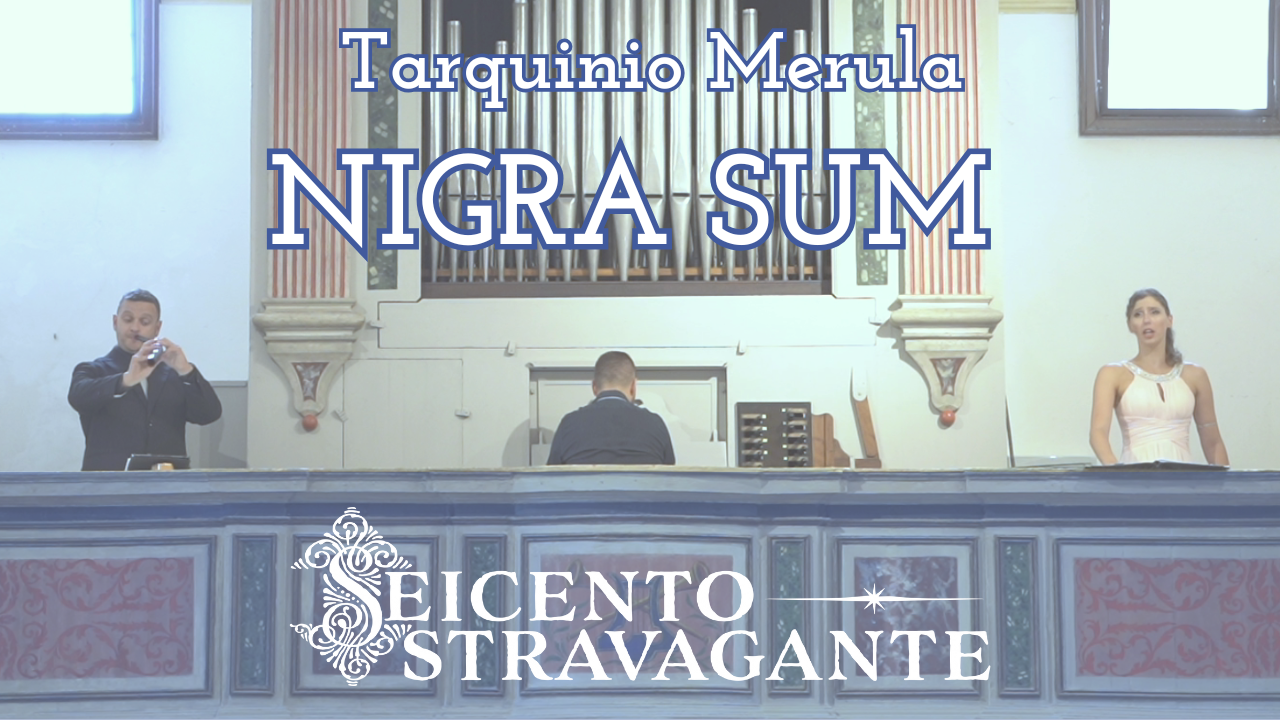
Tarquinio Merula (1595-1665) Nigra sum, A2. Canto & Violino
from “Il primo libro de motetti, e sonate … op. 6” 1624
Seicento Stravagante:
Miriam Callegaro, mezzosoprano
David Brutti, cornetto
Nicola Lamon, organ
Cornetto 440hz by Paolo Fanciullacci, organ by Angelo Agosti (1869)
Live recording at “Antica Pieve di San Prosdocimo” Villanova di Camposampiero (Padova) on 22-08-2024
www.seicentostravagante.com
We are pleased to present a refined interpretation of “Nigra sum” by Tarquinio Merula, a significant masterpiece of Italian Early Baroque music. This performance features the exquisite combination of mezzosoprano voice, cornetto, and organ, showcasing the elegance and depth of this timeless composition.
In this video, you will find:
A graceful rendition by the mezzosoprano, whose voice brings forth the poignant nuances of the text.
The rich timbre of the cornetto, adding a distinctive layer to the melodic structure.
The organ, which provides a lush harmonic foundation, enhancing the overall atmosphere of the piece.
We invite you to immerse yourself in this captivating performance and appreciate the beauty of Baroque music. Please consider subscribing for more elegant musical interpretations.
Thank you for watching.
“Nigra sum” is a motet for mezzosoprano, cornetto, and organ, illustrating Merula’s ability to combine different timbres to create a rich sonic landscape. The piece is notable for its lyrical melodies and harmonic complexity, which evoke the poignant themes derived from its biblical text. The title, translating to “I am black,” references a line from the Song of Solomon, conveying themes of beauty juxtaposed with darkness, a metaphor for human experience and divine love.
The composition features an expressive vocal line that allows the mezzosoprano to convey the emotional nuances of the text. The cornetto adds a unique color to the piece, bridging the gap between the human voice and the organ’s harmonic foundation. Merula’s use of counterpoint and harmonic innovation enhances the overall drama and depth of the motet.
Performances of “Nigra sum,” such as those by Seicento Stravagante featuring Miriam Callegaro (mezzosoprano), David Brutti (cornetto), and Nicola Lamon (organ), highlight the work’s intricate interplay between instruments and voice. The live recording at Antica Pieve di San Prosdocimo in Villanova di Camposampiero exemplifies the piece’s emotional depth and the performers’ virtuosity.
“Nigra sum” is more than just a motet; it is a profound exploration of beauty, emotion, and spirituality. Tarquinio Merula’s mastery in blending vocal and instrumental elements gives this work a timeless quality that resonates with audiences today. Through its intricate melodies and rich harmonic language, “Nigra sum” reflects the essence of the Early Baroque period and reaffirms Merula’s significant contributions to the world of classical music. As listeners engage with this remarkable piece, they are invited to explore the emotional landscapes that continue to inspire and move generations.
Biography of Tarquinio Merula:
Tarquinio Merula (1595 – 1665) was an influential Italian composer, organist, and violinist of the Late Renaissance and early Baroque periods. He is best known for his contributions to sacred music, as well as for his instrumental compositions, particularly for keyboard and strings.
Early Life and Education
Birth: Merula was born in Cremona, Italy in 1595.
Musical Training: Little is known about his early musical education, but it is believed that he received training in his hometown, which was known for its rich musical heritage.
Career
Early Career: Merula began his career as an organist and composer, taking on various roles in Italian churches and courts. His early work laid the foundation for his later achievements in vocal and instrumental music.
Positions: He held positions in several Italian cities, including Padua and Venice, where he served as an organist and music director.
Musical Style: His style is characterized by a blend of Renaissance polyphony and the emerging Baroque idiom. He was known for his expressive melodies and innovative use of harmony.
“Nigra sum,” composed by Tarquinio Merula (1595-1665), stands as a significant exemplar of Italian Early Baroque music. This motet, part of Merula’s collection “Il primo libro de motetti, e sonate … op. 6,” published in 1624, showcases the intricate interplay of vocal and instrumental elements characteristic of the period.
Historical Context
Tarquinio Merula was a prominent figure during the late Renaissance and early Baroque periods, known for his innovative approach to sacred and secular music. Born in Cremona, Italy, he developed a style that blended the rich polyphony of the Renaissance with the emerging Baroque idiom. His works often reflect deep emotional expression and a keen sense of melodic development, making them a vital part of the Italian musical canon.
