

Benedetto Ferrari (c.1603-1681) – Amanti, io vi so dire
from “Musiche e poesie varie à voce sola, libro terzo” Venice, 1641
Seicento Stravagante
David Brutti: cornetto
Seicento Stravagante: organ
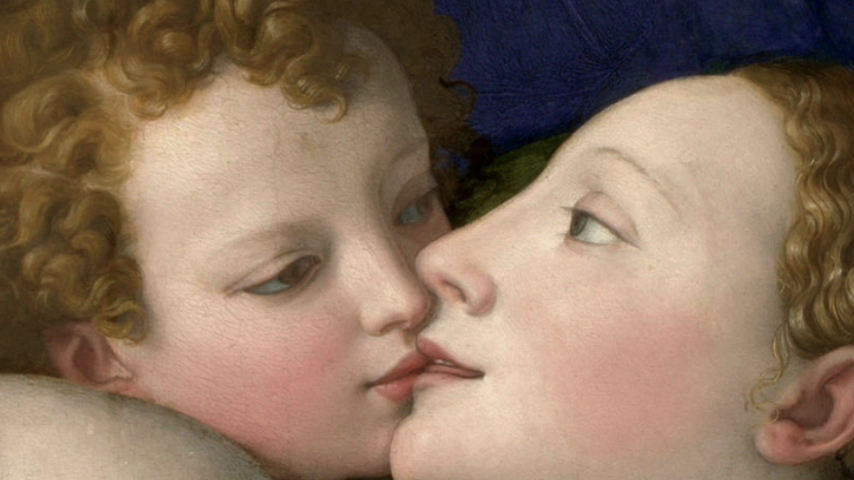
…Angiolo Bronzino, Allegoria del trionfo di Venere ca. 1540
www.seicentostravagante.com
Please enjoy our recording of “Amanti, io vi so dire” by the Benedetto Ferrari performed on cornetto and organ.
For the organ, we used an amazing authentic instrument from middle XVII century made by anonymous around 1660. This amazing organ is situated in Caprile (BL), church of San Bartolomeo and it perfectly fits the musical needs of Benedetto Ferrari’s piece. The pitch of this instrument at the time of the recording session was around 463Hz.
Benedetto Ferrari was born in Reggio nell’Emilia. He worked in Rome (1617–1618), Parma (1619–1623), and possibly in Modena at some time between 1623 and 1637. He created music and libretti in Venice and Bologna, 1637–1644. Ferrari’s Andromeda, with music by Francesco Manelli, was the first Venetian opera performed in a public theatre (in 1637). Subsequently, he provided both the text and the music for two operas, both presented in Venice: La maga fulminata (1638) and Il pastor regio (1640). The 1641 Bolognese staging of the latter included, as its final duet, the text “Pur ti miro, pur ti godo,” which was later reused, possibly with Ferrari’s music, for the final duet in the surviving manuscripts of Monteverdi’s L’Incoronazione di Poppea.[1]
Ferrari went to Vienna in 1651, serving the emperor Ferdinand III. Upon returning to Modena in 1653 he was appointed court choirmaster. His post was eliminated in 1662 but reinstated in 1674, after which he served until his death at Modena. Many sources recount his virtuosity as a theorbo player.
None of his operatic music survives. Extant works include libretti, an oratorio, and three books of monodies under the title Musiche varie a voce sola (Venice 1633, 1637, 1641). Though the last were composed within a relatively short time span, they reflect the changing style of accompanied monody, from the emergence of recitar cantando (midway between song and speech) to the vocal style that is typical of mid-17th century opera, with a more distinctive melody and a clearer rhythm.
About Seicento Stravagante:
Seicento Stravagante was created in 2018 by David Brutti on cornetto and Nicola Lamon on organ and harpsichord.
The ensemble made debut in June 2018 in three concerts acclaimed by critics and public at the Basilica of San Vitale for the Ravenna Festival. Since then the ensemble regularly performs in the main organ and early music festivals such as Festival International de l’Orgue ancien, Basilique de Valère – Sion, Roma Festival Barocco, Amis de l’Orgue de Saint Fiacre (Belgium), Trento Musicantica 2023, Grandezze e Meraviglie – Modena, Festival Frescobaldi – Roma, Società Aquilana dei concerti “B. Barattelli”, Belgrade Early Music Festival – Serbia, La Voce e il Tempo – Genova, Spazio e Musica – Vicenza, Festival Organistico Internazionale di Treviso, Organi Storici in Cadore, Festival Oude Muziek Utrecht, Rassegna organistica “Gjgj Moret” – Venzone (Udine) etc…
The discography of Seicento Stravagante includes: “Il Cornetto del Doge – Music in the Venice Renaissance”, Extended Place, 2021; “Maurizio Cazzati – Motets & Sonatas”, Pan Classics, 2022, with the baritone Mauro Borgioni; “Seicento Stravagante – Music for Cornetto & Organ”, BIS records, 2022.
Seicento Stravagante is also active in the promotion of the historical organ heritage: the two musicians regularly make audio and video recordings using the most prestigious Renaissance and Baroque authentic organs such as Dome of Valvasone – organ by Colombi ca.1532, Basilica Palatina di S. Barbara of Mantova – organ by Antegnati 1565 and church of St. Francis of Trevi – organ by Paolo Pietro da Montefalco 1509.
Seicento Stravagante collaborates with prestigious artists specialized in Renaissance and Baroque performance, in order to produce more articulated programs and projects, aimed at enhancing the repertoire and instrumental virtuosity of the Italian courts between XVI and XVII centuries.
