

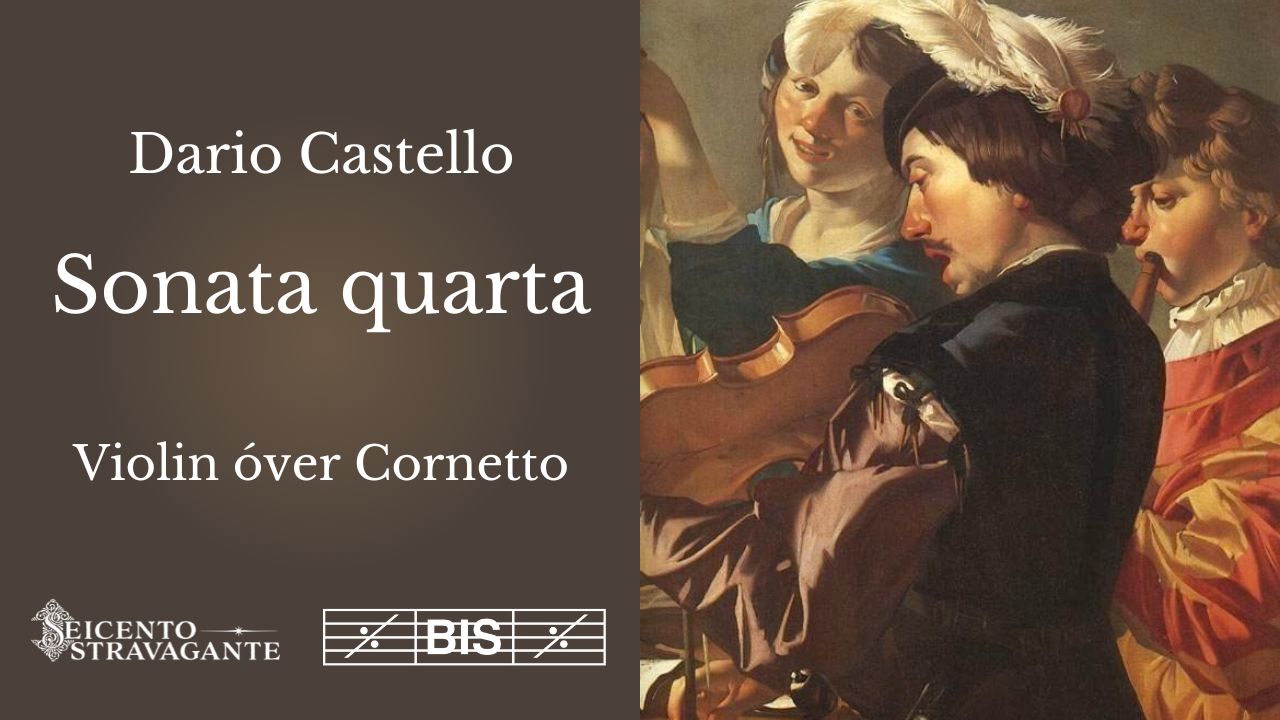
Dario Castello ( ca. 1602 – 1631)
Sonata quarta a due soprani
from “Sonate concertate in stil Moderno… LIBRO SECONDO” Venezia, 1629
Seicento Stravagante:
David Brutti, cornetto
Rossella Croce, baroque violin
Nicola Lamon, organ
www.secientostravagante.com
Booking & management:
Miriam Callegaro
seicentostravagante@gmail.com
“[Giovanni Leonardo] developed a great intimacy with a gentleman named Giorgio, who, besides being very rich, was of such noble and courteous conversation that he attracted everyone to love him, since he is a great friend to foreigners and skillful people, and, in particular, chess players.”
Alessandro Salvio, Il Puttino altramente detto Il Cavaliero Errante (Napoli, 1634)
In the sixteenth century, the quality of a “civil conversation” was of great interest, as described in Stefano Guazzo’s La civil conversatione (1574), whether in the discourse and debate within learned academies or in the verbal games of convivial banquets. Guazzo noted that conversations required a diversity of voices and made the analogy that “you see different pipes in the organ and hear each of them making a different sound, and yet they all have proportion together and make a single body”. As Salvio wrote in Il Puttino, a “noble and courteous conversation” was very attractive to others. Since one significant aspect of the aesthetic change from the sixteenth to the seventeenth century was that musical virtuosi were learning how to “speak” through their instruments (Seicento Stravagante, BIS 2526), it was only natural that they would also begin to “converse”.
In the sixteenth century, composers wove many individual “voices” (whether vocal or instrumental) into a harmonious whole. While academic discourse in the later part of the century felt that contrapuntal artifice was inappropriate for vocal music, since it confused the understanding of the words, it was appropriate to instrumental composition.
The Venetian Dario Castello’s “Sonata quarta” was published in his Sonate concertate in stil moderno, libro secondo (1629) and was dedicated to Ferdinand II. Unlike the sonatas by Buonamente and Marini, Castello’s is much more extravagant and complex, with contrasting opening motives for each voice, changing meters, textures, harmonies, tempo, and each solo instrument is given its own solo “monologue”. The variety of styles in Castello’s music foreshadow characteristics of the later stylus phantasticus. [Charles Brewer]
